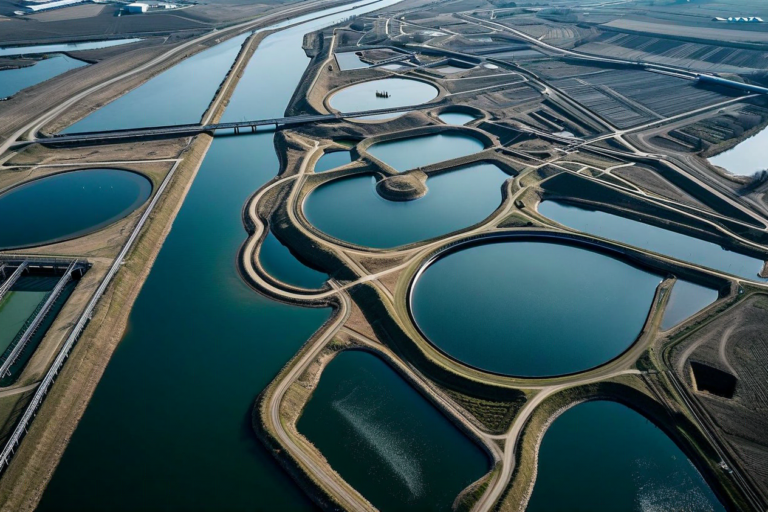
Continuous sensor-based monitoring is replacing periodic sampling across municipal water systems. The transition is no longer optional — it is being driven by regulatory requirements, infrastructure age, and the rising cost of reactive incident management. Here is what the change looks like in practice.
Why Periodic Sampling Is No Longer Enough
Most water utilities still operate on a sampling schedule written into their operating permits — weekly turbidity checks, monthly bacteriological samples, quarterly tests for specific chemical parameters. This schedule was designed around what was analytically feasible in the 1970s and 1980s. It has not kept pace with either the threat landscape or what modern sensor technology makes possible.
The core problem with periodic sampling is the gap between readings. A contamination event that begins on a Monday morning and is sampled on Wednesday afternoon has had 48 hours to move through the distribution system. By the time results come back from the lab on Thursday, the utility is not managing a current problem — it is conducting a retrospective investigation of an event that may have already reached thousands of taps.
Real-time monitoring collapses this gap to seconds. A sensor network deployed across a distribution system generates continuous data streams that feed into a monitoring platform. When parameters deviate from normal ranges, alerts fire immediately. Operators can respond to a contamination event as it develops, not after it has fully propagated.
What "Real-Time" Actually Means in Practice
The term real-time gets used loosely in water industry discussions. It is worth being precise about what different monitoring approaches actually deliver. There is a meaningful difference between a sensor that logs readings every 15 minutes and one that streams continuous data with sub-second resolution. Both are marketed as "real-time monitoring," but they have very different detection capabilities.
For most water quality parameters — pH, turbidity, conductivity, dissolved oxygen, chlorine residual — a measurement interval of one to five minutes is sufficient to catch most contamination events before they become critical. For parameters where spikes can be rapid and severe, such as certain industrial discharges or intentional contamination scenarios, higher frequency sampling is necessary.
Nyad's sensor platform samples core parameters at one-minute intervals under normal conditions and switches to 10-second burst mode when anomaly detection algorithms flag unusual readings. This adaptive sampling approach balances data volume management with detection responsiveness.
Sensor Placement: Where to Monitor
The value of a real-time monitoring network is heavily dependent on sensor placement. A single sensor at the treatment plant outlet tells you a great deal about treatment effectiveness but very little about what happens downstream as water moves through miles of aging distribution infrastructure. An effective monitoring network requires sensors at multiple points in the system.
Strategic placement priorities include: source water intake points to catch upstream contamination before it enters the treatment process; post-treatment verification points to confirm treatment efficacy; key distribution nodes where multiple mains converge; dead-end zones where stagnation creates microbiological risk; and points of entry to high-priority facilities such as hospitals, schools, and food processing plants.
For most municipal systems, a monitoring network of 20 to 50 sensors provides sufficient coverage to detect and localize most contamination events. The exact number depends on system size, topology, and the specific contaminants of concern. Hydraulic modeling can help identify the optimal sensor placement to maximize detection probability within a budget constraint.
Data Management: Handling the Volume
A network of 30 sensors generating readings every minute produces over 43,000 data points per day. Multiply that by the number of parameters measured at each sensor — a typical multi-parameter probe measures six to eight parameters — and a modest monitoring network generates 250,000 to 350,000 data points daily. Over a year, this is nearly 130 million readings.
Managing this data volume requires purpose-built infrastructure. General-purpose databases and spreadsheet tools are not adequate. Water utilities need platforms designed specifically for time-series sensor data, with efficient storage, fast query performance for operational dashboards, and long-term archiving for compliance and forensic purposes.
Cloud-based platforms handle the storage and compute requirements that would be prohibitive to manage on-premises. Edge processing at the sensor node reduces the data that must be transmitted — sending only anomaly alerts and summary statistics rather than raw reading streams — which keeps connectivity requirements manageable even in remote locations.
Integration With Existing Operations
Real-time monitoring does not exist in isolation — it must integrate with the operational systems water utilities already use. For most utilities, this means SCADA systems that control treatment processes and distribution infrastructure, laboratory information management systems where sample results are recorded, and compliance reporting platforms used to meet regulatory obligations.
API-first monitoring platforms enable this integration without requiring utilities to replace existing systems. Nyad connects to SCADA via standard OPC-UA and Modbus interfaces, pushes alert data to incident management systems via webhooks, and exports compliance-ready reports in the formats required by EPA and state regulators. The monitoring layer augments existing operations rather than displacing them.
Staff Readiness: The Human Side of the Transition
Technology is only part of the real-time monitoring transition. Staff must be prepared to work in an environment where alerts may arrive at any hour, where data volumes are orders of magnitude higher than they were under a sampling regime, and where the role of water quality professionals shifts from sample management to continuous situational awareness.
Effective implementation requires investment in training, in alert management protocols that prevent alarm fatigue, and in clearly defined escalation procedures. A monitoring system that generates too many alerts — many of which turn out to be sensor noise or benign fluctuations — will quickly lose operator trust. Tuning alert thresholds and investing in alert quality are as important as deploying the sensors themselves.
The utilities that make this transition successfully are not just the ones with the best technology — they are the ones that build the operational discipline to act on what the data is telling them, consistently and reliably, over years of continuous operation.